Best Compact Cameras 2027: Which One Should You Buy?
Your phone can take great photos, but sometimes you want something more. A good best compact camera can give you better control, stronger zoom, and a more enjoyable way to capture travel, street, family, and everyday moments. The challenge is finding the right one without spending money on features you may never use.
In this guide, we’re looking at the best compact cameras in 2027 and comparing five options for different types of photographers. Whether you want the best compact camera for travel, a small camera for street photography, a pocket camera with useful zoom, or a camera for vlogging and YouTube, there are several great choices to consider.
We’ll look at image quality, portability, autofocus, zoom, video performance, stabilization, low-light shooting, and overall value. We’ll also point out the downsides of each camera, so you can see what you’re really getting before you buy.
From the Panasonic Lumix ZS99 and Sony RX100 VII to the Ricoh GR IV and Fujifilm X100VI, this guide will help you find the best compact camera for your needs and budget.
Table of Contents
5. Panasonic Lumix ZS99
If you want a compact camera for travel that can fit in your pocket but still give you a serious zoom range, the Panasonic Lumix ZS99 is worth a look. Its biggest advantage is the 30x optical zoom, which is especially useful when you’re traveling and want to capture distant buildings, landscapes, animals, or details without carrying a large camera and lens. The 3-inch touchscreen and optical image stabilization also make everyday shooting simple.
Reasons to Buy
- Excellent travel zoom: The 24–720mm equivalent range gives you plenty of reach in a small body.
- Easy to carry: At about 322g with the battery and card, it is genuinely pocket-friendly for travel and everyday use.
- Good for daylight: In good lighting, the camera can produce pleasing photos while giving you much more zoom than most phones.
- Useful for video: It supports 4K recording and has optical stabilization for handheld shooting.
- USB-C charging: You can charge it in-camera, which is convenient when traveling.
Reasons to Avoid
The biggest weakness is low-light image quality. The small 1/2.3-inch sensor can produce noticeable noise and loss of detail when you’re indoors, in shade, or shooting after dark. Independent testing also found that stabilization becomes less effective when shooting at the extreme end of the zoom.
It also doesn’t have a built-in viewfinder, so you’ll rely on the rear screen for framing your shots.
Best for: Travelers, casual photographers, families, and anyone who values a small pocket camera with a long zoom more than top-tier low-light performance.
My verdict: If your priority is portability and huge zoom in a tiny camera, the ZS99 makes sense—but for better low-light photos, I’d look higher up this list.
4. Canon PowerShot V1
If you’re looking for a compact camera for YouTube, vlogging, or social media, the Canon PowerShot V1 is one of the most interesting options here. It feels much more focused on video than a traditional point-and-shoot camera. The wide 16–50mm equivalent lens is useful when filming yourself, while the fully articulating screen makes it easy to check your framing. Its optical stabilization also does a good job of keeping handheld footage steady.
Reasons to Buy
- Great for vlogging: The wide lens makes it easier to film yourself without holding the camera too far away.
- Easy framing: The fully rotating screen is helpful when recording yourself or shooting from unusual angles.
- Good video tools: You get 4K recording, a built-in 3-stop ND filter, and effective stabilization.
- Better audio options: It has both microphone and headphone ports, which is a big advantage if you’re serious about making videos.
- Useful for longer recording: The built-in cooling fan helps manage heat during extended video recording.
- Strong autofocus: Canon’s Dual Pixel CMOS AF makes focusing on yourself and your subjects much easier while recording.
Reasons to Avoid
The main catch is that the V1 is not the best choice if photography is your priority. The body is deeper because of the cooling fan, and reviewers found that its controls and grip are more video-focused than photo-focused. It also has no built-in viewfinder or flash.
Battery life can also be a concern for heavy video users. One independent test recorded around 78 minutes of 4K recording on a full battery, so carrying a spare battery is a smart idea for longer shooting days.
Best for: YouTubers, vloggers, TikTok creators, travel creators, and anyone who wants a small camera built mainly around video.
My verdict: If video comes first, the PowerShot V1 is a strong compact choice—but photographers should keep looking because the next cameras on this list are more versatile for still photos.
3. Sony RX100 VII
If you want one small camera that can handle travel, family photos, street photography, and video, the Sony RX100 VII is hard to ignore. It gives you a very useful 24–200mm zoom, so you can shoot a wide travel scene one moment and zoom in on a distant subject the next. The autofocus is one of its biggest strengths, especially when people or subjects are moving. Independent testing has found the tracking autofocus highly reliable, while the camera can shoot up to 20 frames per second with autofocus tracking.
Reasons to Buy
- Excellent travel camera: It is small enough to carry all day, but the 24–200mm zoom gives you much more flexibility than a typical pocket camera. RTINGS.com
- Outstanding autofocus: Great for kids, pets, travel moments, and other subjects that don’t stay still.
- Great for video: You get stabilized 4K video, a flip-up touchscreen, and a microphone input, making it useful for casual vlogging and YouTube. Sony
- Built-in viewfinder: The pop-up EVF is useful when bright sunlight makes the rear screen harder to see.
- Very portable: This is one of its biggest advantages—you can take it almost anywhere without carrying a camera bag. RTINGS.com
Reasons to Avoid
The biggest weakness is low-light performance. The lens is very flexible, but its maximum aperture gets smaller as you zoom in, so it isn’t the best choice for dark indoor scenes or night photography. Independent testing also found the battery life to be short, and the tiny body can feel cramped in larger hands.
Best for: Travelers, families, vloggers, and anyone who wants a pocket-sized compact camera with strong autofocus and a useful zoom.
My verdict: The RX100 VII is one of the best all-around pocket cameras here—especially if you want versatility without carrying a bigger camera.
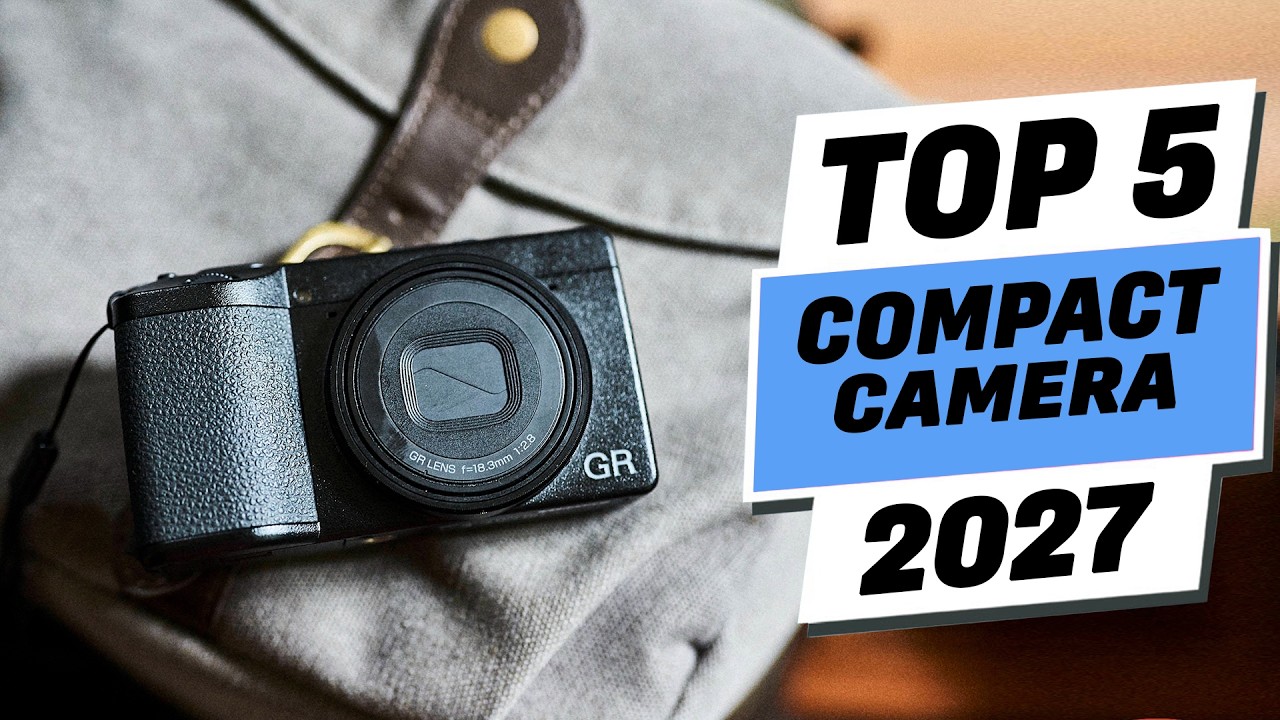
2. Ricoh GR IV
If you want a camera you can actually carry with you every day, the Ricoh GR IV is one of the most interesting compact cameras you can buy. It is small enough to slip into a pocket, but it uses an APS-C sensor and a sharp fixed 28mm-equivalent lens, giving it image quality that is impressive for such a tiny camera.
The real appeal is how quickly you can use it. The controls are designed for one-handed shooting, and Ricoh’s Snap Focus feature lets you set a focus distance in advance. That makes the GR IV especially fun for street photography, travel, and those quick everyday moments when you don’t want to stop and think about camera settings.
Reasons to Buy
- Truly pocketable: At about 262g with the battery and card, it is easy to carry all day.
- Excellent image quality: The APS-C sensor and fixed 28mm-equivalent F2.8 lens deliver impressive detail for a camera this small.
- Great for street photography: Snap Focus and the quick controls make it easy to capture moments without slowing yourself down.
- Excellent everyday camera: If you want something better than your phone but don’t want to carry a traditional camera, this is exactly where the GR IV makes sense.
- Better battery than the GR III: Ricoh rates it for around 250 shots per charge, and independent testing found roughly that level in real-world use.
- Built-in storage: The 53GB of internal storage is convenient if you forget your memory card or simply want extra space.
Reasons to Avoid
The biggest thing to understand is that this is a specialized camera. The 28mm-equivalent lens is fixed, so you cannot zoom in like you can with the Sony RX100 VII. If you regularly photograph distant subjects, wildlife, sports, or people from far away, this probably isn’t the right choice.
Autofocus is another weakness. Single autofocus is generally quick, but independent testing found the continuous autofocus and tracking noticeably behind many modern cameras.
It also has no built-in viewfinder, and the rear screen does not tilt, so some shooting angles can be less convenient.
Best for: Street photographers, travelers, everyday photographers, and anyone looking for a truly pocketable camera with much stronger image quality than a typical point-and-shoot.
My verdict: The GR IV is an excellent everyday and street camera, but its fixed lens means you should really want the 28mm style before buying it.
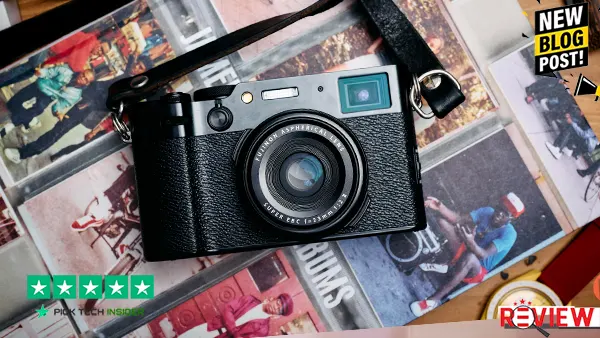
1. Fujifilm X100VI
If you want a premium compact camera for photography, the Fujifilm X100VI is the one that stands out most on this list. It combines a relatively small body with a 40.2MP APS-C sensor, a fixed 35mm-equivalent F2 lens, in-body stabilization, and Fujifilm’s famous Film Simulation modes. The result is a camera that is not just about taking good photos—it makes everyday photography more enjoyable.
The fixed lens may sound limiting at first, but that is actually part of the appeal. You learn the 35mm view, move closer or farther from your subject, and spend less time worrying about which lens to use. It works especially well for street photography, travel, portraits, and everyday shooting. The hybrid viewfinder is another big advantage, letting you switch between an optical and electronic view.
Reasons to Buy
- Excellent image quality: The 40.2MP APS-C sensor produces detailed photos with strong overall image quality. Independent testing also found very good JPEG and RAW results.
- Great for everyday photography: The 35mm-equivalent lens is a useful middle ground for street scenes, travel, people, and everyday moments.
- Built-in stabilization: The in-body stabilization can help when you’re shooting handheld in lower light.
- Beautiful straight-out-of-camera photos: Fujifilm gives you 20 Film Simulation modes, including REALA ACE, so you can get different looks without spending hours editing every picture.
- Hybrid viewfinder: You can use either an optical viewfinder or an electronic viewfinder, which gives the camera a shooting experience that most compact cameras simply don’t offer.
- Still portable: At about 521g with the battery and memory card, it is much easier to carry than a typical interchangeable-lens setup.
Reasons to Avoid
The biggest issue is the fixed lens. You cannot zoom in or swap lenses, so the X100VI is not the right camera if you need a long zoom for wildlife, sports, or distant subjects. You also need to be comfortable with its 35mm perspective.
Autofocus is another limitation. It has subject detection, but independent testing found that the lens cannot focus quickly enough to make the most of that system with fast-moving subjects. So this camera is better for everyday, street, travel, and planned photography than fast action.
Battery life is decent rather than outstanding, with Fujifilm rating it around 450 shots using the optical viewfinder or 310 with the electronic viewfinder. Carrying a spare battery is still a good idea for a long day of travel.
Best for: Photographers who want a premium everyday camera for travel, street photography, portraits, and creative shooting, and who don’t mind using a fixed lens.
My verdict: The X100VI isn’t the most flexible compact camera, but if you want great photos, beautiful colors, and a camera you’ll actually enjoy carrying, it’s my top pick.
How to Choose the Right Best Compact Cameras
Choosing the right compact camera doesn’t have to be complicated. The best choice depends on what you actually plan to photograph, how much you want to carry, and which features matter most to you.
1. Think About How You’ll Use It
Start with your main reason for buying. For travel photography, a small zoom camera can be extremely useful because you can capture both wide scenes and distant subjects without changing lenses. For street photography and everyday carry, a small fixed-lens camera like the Ricoh GR IV may make more sense. If you’re mainly creating YouTube videos or vlogs, look for features such as a flip screen, microphone input, and good autofocus.
2. Check the Sensor Size
Sensor size can have a big effect on image quality, especially when you’re shooting indoors or in low light. In general, a 1-inch sensor is a useful step up from the small sensors found in many basic point-and-shoot cameras, while APS-C compact cameras such as the Fujifilm X100VI and Ricoh GR IV can offer even stronger image quality. Don’t choose based on megapixels alone.
3. Decide Between a Fixed Lens and Zoom
This is one of the biggest decisions you’ll make. A fixed-lens compact camera gives you one focal length, which can be great for street photography, portraits, and everyday shooting. A zoom camera gives you much more flexibility, especially for travel, family events, and distant subjects. For example, a camera with a 24–200mm range can cover both wide scenes and distant details without changing lenses.
4. Don’t Forget the Features You’ll Actually Use
Before buying, think about the small features that can make daily shooting easier. Image stabilization is useful for handheld photos and long zoom shots, while a viewfinder can be helpful when the rear screen is difficult to see in bright sunlight. For video, check for 4K recording, a microphone input, a flip or fully articulating screen, and reliable autofocus. Also consider the camera’s size and weight—you’re much more likely to use a camera that you’re comfortable carrying every day.
Final Verdict
There isn’t one perfect compact camera for everyone. The right choice depends on what you want to photograph and how you plan to use it. If you want a small travel camera with a powerful zoom, the Panasonic Lumix ZS99 is a practical choice. For YouTube, vlogging, and video, the Canon PowerShot V1 makes more sense. The Sony RX100 VII is a great all-around option if you want a pocket camera that can handle both photos and video.
For street photography and everyday carry, the Ricoh GR IV is hard to beat because of its tiny size and strong image quality. But if you want a more premium photography experience, the Fujifilm X100VI is our top pick. Its excellent image quality, stabilization, hybrid viewfinder, and Film Simulation modes make it a camera you’ll genuinely enjoy using.
Before you buy, think about your shooting style, lens needs, low-light performance, size, and budget. A camera doesn’t have to be the most expensive one to be the right one. Choose the model that fits the way you actually shoot, and you’ll get much more value from it.
Frequently Asked Questions
1. Are compact cameras still worth buying in 2027?
Yes, especially if you want something that does more than your phone in a specific area. Compact cameras can offer longer optical zoom, larger sensors, better manual control, or a more enjoyable photography experience. The key is choosing a camera that gives you something your smartphone doesn’t already do well.
2. What is the best compact camera for travel?
There isn’t one perfect choice for every traveler. A camera like the Sony RX100 VII is a strong option if you want a small body with a flexible zoom and strong autofocus. The Panasonic Lumix ZS99 makes more sense if having a very long zoom in a pocketable body is your priority, while the Fujifilm X100VI is better suited to travelers who care more about still-image quality and don’t need a zoom.
3. Is a bigger sensor better in a compact camera?
Generally, yes. A larger sensor can provide better image quality and usually performs better in low light, although the lens and overall camera design also matter. For example, 1-inch sensors are common in higher-end travel compacts, while APS-C models such as the Ricoh GR IV and Fujifilm X100VI can offer even more image-quality potential.
4. Should I choose a fixed-lens or zoom compact camera?
Choose a fixed-lens camera if you mainly enjoy street photography, everyday shooting, or portraits and don’t mind moving yourself to frame the shot. A zoom compact camera is usually more practical for travel because you can photograph both wide scenes and distant subjects without changing lenses.
5. What should I look for when buying a compact camera?
Start with the way you plan to use it. Look at sensor size, lens range, aperture, autofocus, image stabilization, viewfinder, video features, battery life, size, and weight. Don’t choose based only on megapixels or the biggest zoom number. A camera that fits your shooting style and that you’ll actually carry with you is usually a better choice than one with impressive specs that stays at home.

Hridoy Taqi
CEO & Founder at HridoyTaqi
Hridoy is a strategic problem solver who drives growth and revenue through innovative SEO and digital marketing strategies. With over 2 years of experience…..